Translate

Wednesday, October 7, 2020

I was excited to read article because it gives me hope for a revitalize downtown


IDS Center's Crystal Court to get $5 million makeover

A seven-month project will introduce taller trees, new seating and a revamped water feature to the "social skyscraper." 


A revamped Crystal Court in the IDS Center will feature new seating and canopies of taller trees. It is the first remake for the space in 22 years.


The Crystal Court space in the iconic IDS Center is getting a major makeover.

Accesso Partners, the owner of the 57-story building, said it will spend $5 million to revamp the space that has been a popular public gathering spot for nearly 50 years.

The last time the space was updated was 22 years ago, so it’s time, officials said.

The Crystal Court opened in 1972 and was always intended to be a destination and gathering place for people from all walks of life, project leaders said. The changes, expected to take seven months to complete, will ensure the court’s urban-park theme continues.

“The IDS Center is known as the country’s first ‘social skyscraper,’ and this renovation aligns perfectly with his [architect Philip Johnson] original vision for the space,” said Deb Kolar, Accesso and IDS Center general manager.

During construction, protective walls will be erected and covered in murals by local artists from the north Minneapolis visual-arts center Juxtaposition Arts.


ACCESSO PARTNERS RENDERING
Wintergreens 10 feet taller will no longer depend on garden boxes inside IDS Center.


ADVERTISEMENT


Once construction finishes next summer, those walls will be relocated to reveal a new court with an infinity-edge reflection pool with moving water, new modular seating and trees that will no longer depend on garden boxes.

Instead, ficus benji wintergreens will be planted below the granite floor and will be expected to grow 24 feet tall, 10 feet higher than the current garden box trees.

The 68 white benches that now flank the tree boxes will donated to the Minneapolis Good Chair Project, a nonprofit group that helps create public spaces.

The grander scale of the new trees and water feature should create a space that is very green and airy with the soothing sound of running water, said Perkins & Will Design Director David Dimond, the architect of record for the project.

Other renovation partners include Minneapolis-based landscaper McCaren Designs Inc., general contractor Greiner Construction and Peter Hendee Brown, the New History architect and planning consultant who ensured the renovations retain Johnson’ vision, IDS’ original architect.

“The refreshed space will pay homage to Mr. Johnson’s legacy by accommodating all of the different ways people prefer to interact and engage today,” Kolar said.

Kolar said the project has been in the works for two years and was not affected by the pandemic, which has made some parts of the city a ghost town as many commuters stayed home.

By the time privately paid-for renovations finalize in July, Kolar said organizers hope the pandemic will be behind them so the IDS Center’s 97 tenants and the entire community can enjoy the new gathering space. The project investment is a signal that Accesso and the IDS building executives “believe in the city” of Minneapolis, she said.

The glass-clad IDS building boasts nearly 2 million square feet of space, the 19-story Marquette Hotel, two stories of retail stores, restaurants and banks, plus skyways that connect to the enclosed eight-story Crystal Court.

The project has been presented to the Minneapolis City Council, Mayor Jacob Frey and the Minneapolis Downtown Council. Tuesday evening, a presentation was scheduled to be made before the Downtown Neighborhood Association.

The city has been badly impacted by the pandemic, protests over the May police killing of George Floyd and two splashes of violent riots that left downtown businesses with broken windows and stolen goods.

Minneapolis City Councilwoman Lisa Goodman said the latest investment in the structure is good news for the city. “I’m excited about the renovations to the Crystal Court and appreciate the continued investment in our downtown,” she said.


Dee DePass is a business reporter for the Star Tribune. She spent the last four years covering Minnesota's manufacturing and mining industries. She previously covered the economy, workplace issues and banking.

dee.depass@startribune.com 612-673-7725 DePassStrib

Monday, October 5, 2020

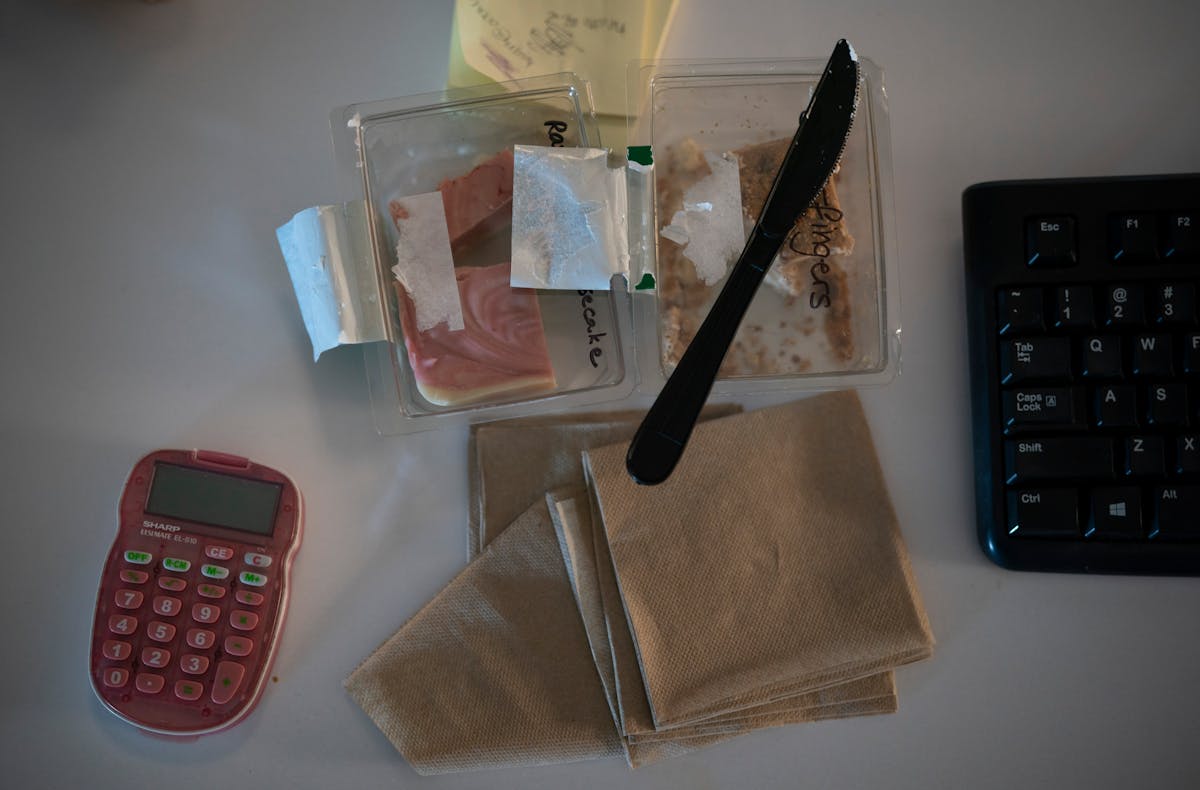
Returning to the office for a brief moment to retrieve needed supplies I too noticed the time warp with dead plants, March calendars, and moldy sandwiches that hadn't been discarded. All that was need was the moderator of the Tri light Zone

 I too noticed this same time warp of sorts when I briefly stopped in to retrieve items from my office. The March calendar page blared out at me as a reminder that spring was finally here, along with a plant that had long since died through lack of nourishment.  This was an article I saw in the Star Tribune.  I was reminded how all of us are much better when we are working in teams of colleagues we can see and talk to on a daily basis.  As an optimist, I believe the corporate culture as we once knew it will return. It's just a matter of time.


The pandemic has emptied out office buildings with most workers doing their jobs from home. The Sleep Number Corp.’s downtown Minneapolis headquarters is no exception, with only a handful of employees working in the office.

Two downtowns on hold as big employers monitor the march of the virus

Story by Jackie Crosby • Photos by Jeff Wheeler • Oct. 3, 2020


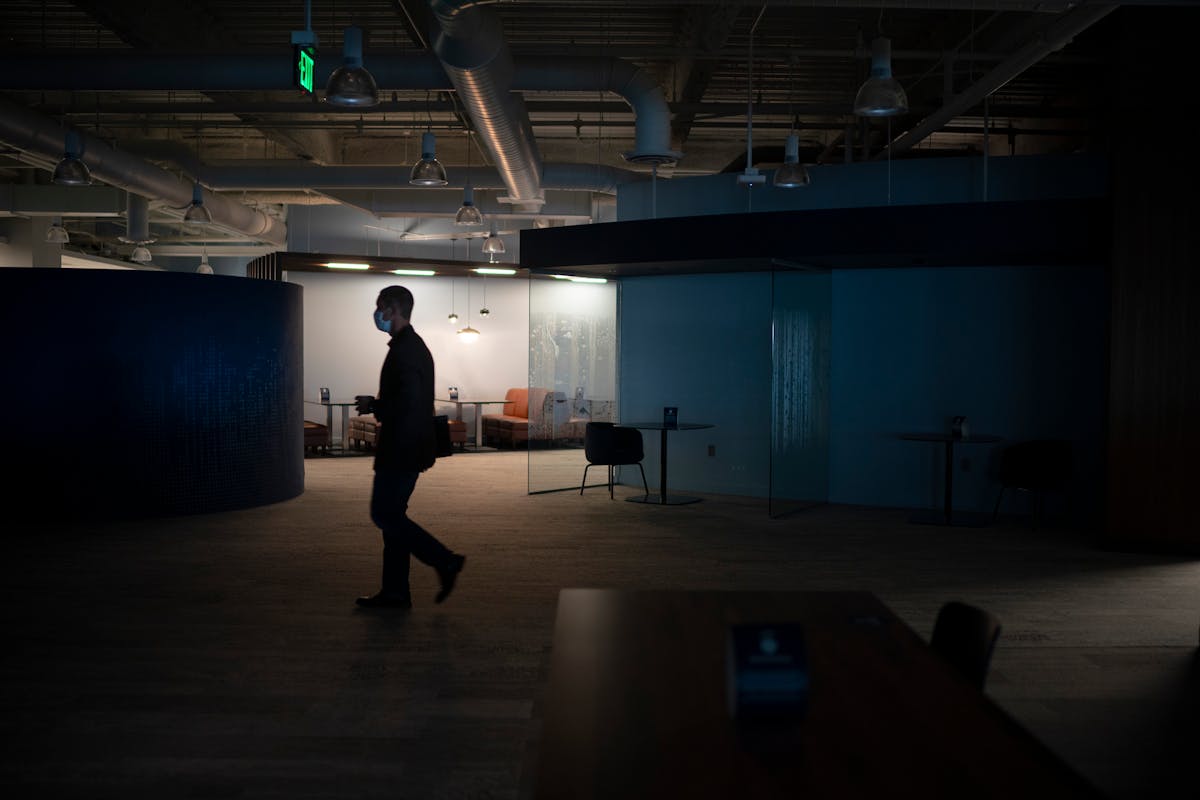
Kody Karschnik walks through the darkened office at Sleep Number Corp., laptop in hand, passing a sea of empty cubicles locked in a pandemic time warp.

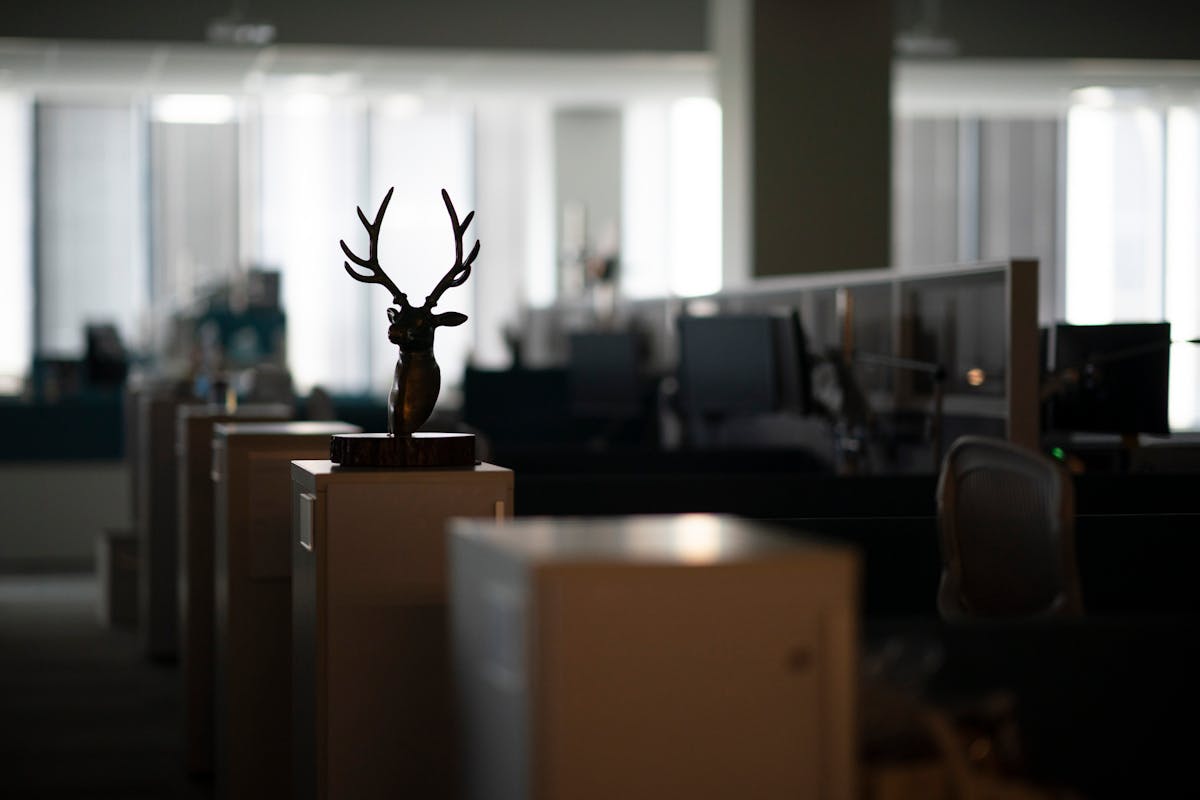
Desk calendars are paused on March. On one desk, an open bag of potato chips. On another, tinseled remnants from a colleague’s baby shower. And, yes, dead plants.

Like everyone at Sleep Number, Karschnik worked from home when the coronavirus outbreak hit this spring. But now, the engineer spends about half of each week in the company’s testing lab, making him a rare figure in downtown Minneapolis, where only about one in 10 workers regularly work in their offices these days.

“When you see someone downtown, all of a sudden you are one of the few people in the office,” Karschnik said. “Even if you didn’t know them before, you wave, you introduce yourself.”

In pre-pandemic times, workers flooded back to offices after Labor Day, with children back in school and summer vacations a recent memory. But this autumn, downtown offices are still mostly empty seven months after Minnesotans were put under emergency orders and told to stay home to slow the coronavirus’ spread.

A vast ecosystem of businesses and people who support office workers remains disrupted. For the people who come into their offices, the experience is strange on many levels. “It’s just so quiet,” said Emily Olinger, who works for a small nonprofit and was enjoying a recent lunch outside U.S. Bank Plaza. “The food trucks were always here and it was packed with people.”

Getting back to the way things were has turned into a chicken-and-egg problem.

“Tenants in the office towers don’t want to come back if there isn’t any place for their employees to go,” said Deb Kolar, the general manager of IDS Center, the 57-story tower that is the biggest office building in the state. “But if they don’t come back there isn’t going to be anywhere for their employees to go.”

But healthy downtowns in Minneapolis and St. Paul are essential to the state and region. The city centers draw not just hundreds of thousands of daily workers but also visitors to conventions, fans to sports events and patrons to the theater. People move downtown to be closer to work, top restaurants and entertainment.

Because companies have discovered they can still do business with a remote workforce, and employees appreciate the flexibility of working from home, the pandemic’s impact likely will linger in downtowns well after the risk of COVID-19 diminishes.


“Even when we’re back to ‘full return’ on the downtown workforce, it’s not going to be what it was before,” said Steve Cramer, who leads the Minneapolis Downtown Council. “Remote work is going to be a more accepted part of the regular workday experience.”regular workday experience.”


Kody Karschnik, an engineer in research and development at Sleep Number, walked through the darkened office on his floor, where another one of the handful of employees in the building was also working in an his office.


Volume is turned down

In the U.S., the only previous disruption to life in the core of major cities was the flight to suburbs, a slow-motion trend for businesses in the 1960s and 1970s. But since the 1990s, with dips in recessions, both downtown Minneapolis and St. Paul have seen increases in the number of office workers.

In February, about 218,000 people poured into downtown Minneapolis for work each morning, more than at any time in the city’s history, about 70% of them on buses and trains. Now, express bus ridership from the suburbs is down 91% and light rail trips off 71%.

“If you walk downtown right now, you don’t see many people,” said Adam Harrington, Metro Transit’s director of service development. “It’s quite a stark difference from the vibrancy of life in downtown as it was.”

In St. Paul, which in recent years has lost some of its office space to apartments and condominiums, about 10% of its 56,000 workers are back. “The volume is turned down everywhere,” said Joe Spencer, who leads the St. Paul Downtown Alliance. “We miss our people.”

Building owners and managers report that only about 12% of the office space in downtown Minneapolis is occupied. Pedestrian traffic on Nicollet Mall is less than a quarter of what it was before people went home to work, and only 43% of restaurants are open, according to research from the Downtown Council.

Skyway hours are limited. Benches around the fountain at IDS Center have been put into storage so people can’t congregate. Some convenience stores, restaurants and retail stores have cleaned off their shelves and turned out the lights.

Others have posted signs signaling future intentions, such as the Dunn Bros. in SPS Tower, which plans to open Monday, just from 7 a.m. to noon.

Song Tailoring and Alterations near LaSalle Plaza has taped dozens of colorful cloth masks to its glass storefront to entice passersby to stop in.

At the Grill and Greek Cafe in Northstar Center, prices have been lowered and the menu has been trimmed to gyros and kebabs.

“It’s been slow,” said manager Rogelio Rojas, who slashed his staffing and hours in half. “Sometimes 15 customers, sometimes 20. We were expecting people to come to work after Labor Day but they didn’t.”

The view through the floor-to-ceiling of windows at Robert Swanson’s Fixology store has been dismal. The electronics repair shop sits at a once-hopping intersection with popular fast-food eateries and the skyway to the Wells Fargo Bank building.

“It’s lonely,” Swanson said. “With multiple skyways closed down, it strangled a lot of business traffic. It’s discomfiting when you stop seeing people walking through that you’ve seen day after day. I’m hoping things pick back up, but I’m under no disillusion that they will.”


Two packages containing fudge - with sell-by dates in late April - were left behind on a employee’s desk in Sleep Number Corp.’s downtown Minneapolis headquarters.


‘Different vibe’

Downtown Minneapolis has confronted a multilayered threat with the pandemic, its resulting layoffs and the civil unrest sparked by George Floyd’s death during an arrest by police.

Nordstrom Rack, though open, is still boarded up after looters bashed in windows and stole merchandise after a false rumor of police violence in late August.

Target’s nearby store was damaged and raided then as well, forcing the retailer to temporarily close its downtown store for a second time.

There’s a “different vibe” and “uncomfortable factor” simply because there are fewer people downtown, the Downtown Council’s Cramer said.

“Most companies just want to feel like they can have more confidence in the safety and security of downtown and how their employees perceive that by the time they really want to start really pushing people back into the office,” Cramer said.

During the first weeks of the pandemic, many employers set their sights on bringing workers back to the office in September.

But as summer wore on, the threat from the virus didn’t lessen enough for corporate leaders and employees to feel safe about returning.

Target, downtown Minneapolis’ largest employer, decided on a gradual approach for bringing its 8,500 workers back, keeping most at home through December.

Wells Fargo said it will maintain remote work at least through November, while U.S. Bank has kicked plans for a return out to next year.

Thrivent’s new $125 million headquarters was recently completed on time and within budget, but most of the 900 employees it expected to fill the space are still working virtually. The company plans a phased approach during “an appropriate time” to bring them back.

In St. Paul, Ecolab doesn’t plan to start bringing the bulk of its 1,580 workers back to downtown until Jan. 4 “at the earliest.”


The windows provide most of the light in the empty Sleep Number Corp. offices in downtown Minneapolis.


Pushing through

With big companies holding off, the smaller firms that orbit them are trying to hold on.

“It’s no one’s fault downtown,” said Antonio Gambino, who went from selling up to 100 pizzas a day at each of his three Andrea Pizza locations to now selling as few as six. “I’ve been at my LaSalle location for 21 years. This is a once-in-a-lifetime thing. We’ll continue to try to push through.”

Ecolab decided to redirect its annual employee giving fundraiser this year to help small businesses. Instead of holding a silent auction for gift baskets and tickets to theater and sporting events — which aren’t happening now — the company will auction off gift cards worth $25 to $125 to redeem at more than 100 St. Paul businesses.

“These gift cards we’re buying are for places that are open and ready for business, and ready for people to come into,” said Kris Taylor, Ecolab’s vice president of global community relations and the Ecolab Foundation.

Sleep Number’s light-filled headquarters in downtown Minneapolis once hummed with the energy of 650 workers moving among five floors.

Now the coffee area has been stripped of its shareable glass mugs, and the cozy chairs and informal huddle areas sit vacant. Lights are off on the upstairs cafeteria area with its wide-angle view of nearby skyscrapers. Trash bins are marked with blue masking tape.

Christine Ackerman, Sleep Number’s vice president of human resources, said the company has benefited from a flexible work philosophy it instituted after the company moved downtown from Plymouth three years ago. But it is committed to its downtown office, she said.

“We can’t wait to be back together in a way that’s familiar, which is close proximity — not always six feet apart and with a mask,” Ackerman said. “But that’s down the road.”


Jackie Crosby is a general assignment business reporter who also writes about workplace issues and aging. She has also covered health care, city government and sports.

jcrosby@startribune.com 612-673-7335
 

Sunday, October 4, 2020

God has a way of restoring lives after profound grief and emotional pain comes into our lives


The Lord is close to the brokenhearted and saves those who are crushed in spirit. Psalm 34:18


Pastor Chan shares his faith journey beginning when his mom died in childbirth. His dad remarried and then his step mom died in a tragic car accident. A few years later, his dad was diagnosed with cancer and died soon after.  It was then he began searching for the meaning of God.  He found a church home where he started to study scripture and be encouraged through other believers  God brought a devoted Christian woman into his life where they fell in love and became husband and wife. They were married for 25 years when he preached this sermon.  One day, he asked his wife, "do you think there is another couple in this world as happy as we are?" He gave thanks to God for the many blessings after so much grief he had to endure in his beginning years of life.

This really illustrates how God is close to the broken-hearted and when one enters into that isolating place God reminds you that he is there with you every step of the way of this journey.  He not only walks with you like the good shepherd tending his flock of sheep, but he becomes that warm blanket giving comfort on a cold night.

I hear so many people say after tragedy, "if God really exists, then He wouldn't allow my child, my sibling, my wife, my husband, my friend to die in this tragic way." Instead of rejecting God and venturing off to try other worldview, God wants us to draw near to Him by praying and reading the word of God because He is truly close to the broken hearted. 
We live in a world that is broken.  Broken by this corona virus. Broken by the inability to do the normal things we were so use to doing before the pandemic happened.  We are broken with the thought that our world leaders are being stricken and quarantine with the virus. Some recover, while others die.  We want so much for things to be the same and we can go out to do entertainment things like spending time with friends, seeing movies, or doing the normal things we use to do at church.  We hate how isolating this pandemic has been for all of us and when we lose someone special to us the isolation only complicates our grief.  

Now is not the time to reject God, but to draw near to Him. Instead of rejecting God, seek out people in your community who may be stronger in faith and wisdom and tell them what you are feeling, tell them what has happened to you and then pray continuously.  

In 2007, I was angry with God when my 10-year-old daughter died unexpectedly.  I was ready to reject God, but I chose to draw close to God in my time of need by finding trusted listeners who were willing to listen to me complain about my agony and my pain. I found trusted listeners who were willing to climb down into the muck and mire of my grief and sit there with me until I was better. For me, I began to  journal my pain. I first began writing in a journal and later in a blog.  One day I wonder if I truly recovered from my grief.  As I read pages and pages of my journal I saw how far I have come and how close my Lord drew close to me. 

Alas, I was reminded that after grief occurs, our Lord wasn't done  with me, nor is he done with you in this corona virus world.  
As you slowly recover from your loss, God will reveal to you a broken world filled with people who need the Lord and these words from Steve Green's song come to mind:

Everyday they pass me by
I can see it in their eyes
Empty people filled with care
Headed who knows where
On they go through private pain
Living fear to fear
Laughter hides their silent cries
Only Jesus hears
People need the Lord, people need the Lord
At the end of broken dreams, He's the open door
People need the Lord, people need the Lord
When will we realize people need the Lord?
We are called to take His light
To a world where wrong seems right
What could be too great a cost
For sharing life with one who's lost?
Through His love our hearts can feel
All the grief they bear
They must hear the..

Do not be afraid to share your brokenness with other people.  They need to hear your story because your story gives them hope that it is possible to recover from this pain.  If after reading this blogpost you want to know Jesus, who came into the world to die for all of us, you can know him personally by saying this invitational prayer: 

"I open the door of my life and receive You as my Savior and Lord. Thank You for forgiving my sins and giving me eternal life. Take control of the throne of my life. Make me the kind of person You want me to be."  It doesn't matter what words you use, but I assure you that this Jesus who came into my life will come into your life to become your good shepherd in this corona virus world.
Our God has never abandoned us. He is always there waiting for us. He is only a prayer away from you.

If you are looking for a online church to gather virtually with other Christian's, I encourage you to check out the church my wife and I attend. Simply click on this link and it will take you to the churches webpage.  https://newhopechurchmn.org/