Translate

Tuesday, October 5, 2021

Ex-Facebook employee says network hurts kids, fuels divisions while weakening democracy. I am so glad to see someone with ethics to speak the truth.


Ex-Facebook employee says network hurts kids, fuels division
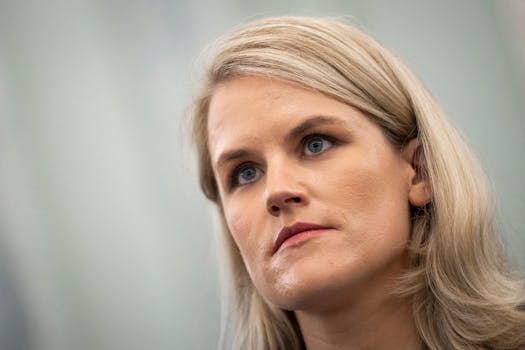
WASHINGTON — A former Facebook data scientist told Congress on Tuesday that the social network giant's products harm children and fuel polarization in the U.S. while its executives refuse to change because they elevate profits over safety. And she laid responsibility with the company's CEO Mark Zuckerberg.

Frances Haugen testified to the Senate Commerce Subcommittee on Consumer Protection. Speaking confidently at a charged hearing, she accused the company of being aware of apparent harm to some teens from Instagram and being dishonest in its public fight against hate and misinformation.

"Facebook's products harm children, stoke division and weaken our democracy," Haugen said. "The company's leadership knows how to make Facebook and Instagram safer but won't make the necessary changes because they have put their astronomical profits before people."

"Congressional action is needed," she said. "They won't solve this crisis without your help."

Haugen said the company has acknowledged publicly that integrity controls were crucially needed for its systems that stoke the engagement of users, but then it disabled some of those controls.

In dialogue with receptive senators of both parties, Haugen, who focused on algorithm products in her work at Facebook, explained the importance to the company of algorithms that govern what shows up on users' news feeds. She said a 2018 change to the content flow contributed to more divisiveness and ill will in a network ostensibly created to bring people closer together.

Despite the enmity that the new algorithms were feeding, she said Facebook found that they helped keep people coming back — a pattern that helped the social media giant sell more of the digital ads that generate most of its revenue.

Senators agreed.

"It has profited off spreading misinformation and disinformation and sowing hate," said Sen. Richard Blumenthal, D-Conn., the panel's chairman. "Facebook's answers to Facebook's destructive impact always seems to be more Facebook, we need more Facebook — which means more pain, and more money for Facebook."

Haugen said she believed Facebook didn't set out to build a destructive platform. But "in the end, the buck stops with Mark," she said referring to Zuckerberg, who controls more than 50% of Facebook's voting shares. "There is no one currently holding Mark accountable but himself."

Haugen said she believed that Zuckerberg was familiar with some of the internal research showing concerns for potential negative impacts of Instagram.

The government needs to step in with stricter oversight of the company, Haugen said.

Like fellow tech giants Google, Amazon and Apple, Facebook has enjoyed minimal regulation. A number of bipartisan legislative proposals for the tech industry address data privacy, protection of young people and anti-competitive conduct. But getting new laws through Congress is a heavy slog. The Federal Trade Commission has adopted a stricter stance recently toward Facebook and other companies.

The subcommittee is examining Facebook's use of information from its own researchers on Instagram that could indicate potential harm for some of its young users, especially girls, while it publicly downplayed the negative impacts. For some of the teens devoted to Facebook's popular photo-sharing platform, the peer pressure generated by the visually focused Instagram led to mental health and body-image problems, and in some cases, eating disorders and suicidal thoughts, the research leaked by Haugen showed.

One internal study cited 13.5% of teen girls saying Instagram makes thoughts of suicide worse and 17% of teen girls saying it makes eating disorders worse.

Because of the drive for user engagement, Haugen testified, "Facebook knows that they are leading young users to anorexia content. ... It's just like cigarettes. Teenagers don't have any self-regulation. We need to protect the kids."

Haugen has come forward with a wide-ranging condemnation of Facebook, buttressed with tens of thousands of pages of internal research documents she secretly copied before leaving her job in the company's civic integrity unit. She also has filed complaints with federal authorities alleging that Facebook's own research shows that it amplifies hate, misinformation and political unrest, but the company hides what it knows.

"The company intentionally hides vital information from the public, from the U.S. government and from governments around the world," Haugen said. "The documents I have provided to Congress prove that Facebook has repeatedly misled the public about what its own research reveals about the safety of children, the efficacy of its artificial intelligence systems and its role in spreading divisive and extreme messages."

The former employee challenging the social network giant with 2.8 billion users worldwide and nearly $1 trillion in market value is a 37-year-old data expert from Iowa with a degree in computer engineering and a master's degree in business from Harvard. Prior to being recruited by Facebook in 2019, she worked for 15 years at tech companies including Google, Pinterest and Yelp.

After recent reports in The Wall Street Journal based on documents she leaked to the newspaper raised a public outcry, Haugen revealed her identity in a CBS "60 Minutes" interview aired Sunday night.

As the public relations debacle over the Instagram research grew last week, Facebook put on hold its work on a kids' version of Instagram, which the company says is meant mainly for tweens aged 10 to 12.

Haugen said that Facebook prematurely turned off safeguards designed to thwart misinformation and incitement to violence after Joe Biden defeated Donald Trump last year, alleging that contributed to the deadly Jan. 6 assault on the U.S. Capitol.

After the November election, Facebook dissolved the civic integrity unit where Haugen had been working. That, she says, was the moment she realized "I don't trust that they're willing to actually invest what needs to be invested to keep Facebook from being dangerous."

Haugen says she told Facebook executives when they recruited her that she wanted to work in an area of the company that fights misinformation, because she had lost a friend to online conspiracy theories.

Facebook maintains that Haugen's allegations are misleading and insists there is no evidence to support the premise that it is the primary cause of social polarization.

"Even with the most sophisticated technology, which I believe we deploy, even with the tens of thousands of people that we employ to try and maintain safety and integrity on our platform, we're never going to be absolutely on top of this 100% of the time," Nick Clegg, Facebook's vice president of policy and public affairs, said Sunday on CNN's "Reliable Sources."

That's because of the "instantaneous and spontaneous form of communication" on Facebook, Clegg said, adding, "I think we do more than any reasonable person can expect to."

___

Follow Marcy Gordon at https://twitter.com/mgordonap.

Monday, October 4, 2021

This should be an interesting week on Capital Hill as we learn more about Facebook's elaborate algorithm in terms of inciting hate on both sides all in the name of making profits for Zuckleberg.

Ex-Facebook manager alleges social network fed Capitol riot

NEW YORK — A data scientist who was revealed Sunday as the Facebook whistleblower says that whenever there was a conflict between the public good and what benefited the company, the social media giant would choose its own interests.

Frances Haugen was identified in a "60 Minutes" interview Sunday as the woman who anonymously filed complaints with federal law enforcement that the company's own research shows how it magnifies hate and misinformation.

Haugen, who worked at Google and Pinterest before joining Facebook in 2019, said she had asked to work in an area of the company that fights misinformation, since she lost a friend to online conspiracy theories.

"Facebook, over and over again, has shown it chooses profit over safety," she said. Haugen, who will testify before Congress this week, said she hopes that by coming forward the government will put regulations in place to govern the company's activities.

She said Facebook prematurely turned off safeguards designed to thwart misinformation and rabble rousing after Joe Biden defeated Donald Trump last year, alleging that contributed to the deadly Jan. 6 invasion of the U.S. Capitol.

Post-election, the company dissolved a unit on civic integrity where she had been working, which Haugen said was the moment she realized "I don't trust that they're willing to actually invest what needs to be invested to keep Facebook from being dangerous."

At issue are algorithms that govern what shows up on users' news feeds, and how they favor hateful content. Haugen said a 2018 change to the content flow contributed to more divisiveness and ill will in a network ostensibly created to bring people closer together.

Despite the enmity that the new algorithms were feeding, Facebook found that they helped keep people coming back — a pattern that helped the Menlo Park, California, social media giant sell more of the digital ads that generate most of its advertising.

Facebook's annual revenue has more than doubled from $56 billion in 2018 to a projected $119 billion this year, based on the estimates of analysts surveyed by FactSet. Meanwhile, the company's market value has soared from $375 billion at the end of 2018 to nearly $1 trillion now.

Even before the full interview came out on Sunday, a top Facebook executive was deriding the whistleblower's allegations as "misleading."

"Social media has had a big impact on society in recent years, and Facebook is often a place where much of this debate plays out," Nick Clegg, the company's vice president of policy and public affairs wrote to Facebook employees in a memo sent Friday. "But what evidence there is simply does not support the idea that Facebook, or social media more generally, is the primary cause of polarization."

The "60 Minutes" interview intensifies the spotlight already glaring on Facebook as lawmakers and regulators around the world scrutinize the social networking's immense power to shape opinions and its polarizing effects on society.

The backlash has been intensifying since The Wall Street Journal's mid-September publication of an expose that revealed Facebook's internal research had concluded the social network's attention-seeking algorithms had helped foster political dissent and contributed to mental health and emotional problems among teens, especially girls. After copying thousands of pages of Facebook's internal research, Haugen leaked them to the Journal to provide the foundation for a succession of stories packaged as as the "Facebook Files."

Although Facebook asserted the Journal had cherry-picked the most damaging information in the internal documents to cast the company in the worst possible light, the revelations prompted an indefinite delay in the rollout of a kids' version of its popular photo- and video-sharing app, Instagram. Facebook currently requires people to be at least 13 years old to open an Instagram account.

Clegg appeared on CNN's "Reliable Sources" Sunday in another pre-emptive attempt to soften the blow of Haugen's interview.

"Even with the most sophisticated technology, which I believe we deploy, even with the tens of thousands of people that we employ to try and maintain safety and integrity on our platform," Clegg told CNN, "we're never going to be absolutely on top of this 100% of the time."

He said that's because of the "instantaneous and spontaneous form of communication" on Facebook, adding, "I think we do more than any reasonable person can expect to."

By choosing to reveal herself on "60 Minutes," Haugen selected television's most popular news program, on an evening its viewership is likely to be inflated because, in many parts of the country, it directly followed an NFL matchup between Green Bay and Pittsburgh.

Haugen, 37, is from Iowa and has a degree in computer engineering and a Master's degree in business from Harvard University — the same school that Facebook founder and leader Mark Zuckerberg attended.

Haugen, 37, has filed at least eight complaints with U.S. securities regulators alleging Facebook has violated the law by withholding information about the risks posed by its social network, according to "60 Minutes." Facebook in turn could take legal action against her if it asserts she stole confidential information from the company.

"No one at Facebook is malevolent," Haugen said during the interview. "But the incentives are misaligned, right? Like, Facebook makes more money when you consume more content. people enjoy engaging with things that elicit an emotional reaction. And the more anger that they get exposed to, the more they interact and the more they consume. "

____

Liedtke reported from San Ramon, California.

Friday, October 1, 2021

Grieving over a loved one has never been easy with the introduction of the QR headstone code that brings your loved ones stories to life.


One of the fears that grieving people have is everyone forgetting the name, or the memories of their loved one. That was my fear when my daughter, Maria, died the night of June 10th, 2007. 

That was before I discovered this new technological advancement known as the headstone QR code.  By simply adhering the code to the gravestone of your loved one, you and others have the capacity to scan the code every time you visit their resting place and see pictures, videos and read the comments left by your friends.

It wasn't long after I received the QR code that I programmed it and adhered it to Maria's headstone at the Lake View cemetery in Nowthen, Minnesota. Grieving no longer has to be a sad occasion when I  can scan this code and bring her' pictures, videos, and comments to life. 

 This QR code can adhere to the headstone, or on the Urn if your loved one was cremated so anyone who visits their resting place will be able to relive the memories, or in the case of young children learn about the person who died.   I truly believe this QR memorial code will soar into the stratosphere as more and more people discover the value it will have in helping them heal from this long journey of grief.